decoding
analytical
culture
Investigating how data and artificial intelligence are transforming decisions, work, and organizations.
Explore research, ideas, and frameworks on Analytical Culture.
-
Analytical Culture:
A Foundational TextAnalytical Culture is a cultural phenomenon that emerges when data, analytical models, and artificial intelligence systems begin to structurally mediate how individuals, organizations, and societies perceive reality, formulate problems, and make decisions. It does not refer to a technique, an isolated discipline, or a set of tools, but to a deeper transformation in the ways we think, act, and organize the world.
In this context, data cease to be merely records of the past and become active elements in the organization of the present and the anticipation of the future. Decisions that once relied predominantly on experience, intuition, or authority increasingly become informationally mediated by metrics, models, algorithms, and automated systems. What changes is not only the speed or scale of decision-making, but the very criteria of legitimacy, evidence, and responsibility.
Analytical Culture is not confined to the field of technology. It permeates work, education, management, science, politics, and everyday life. It is a transdisciplinary phenomenon in which technical, cognitive, organizational, ethical, and epistemological dimensions intertwine. Understanding it requires going beyond the adoption of technologies and examining how these mediations reconfigure forms of collective coordination, regimes of authority, learning processes, and power relations.
From this perspective, the incorporation of data and artificial intelligence cannot be understood merely as gains in efficiency or technical sophistication. It introduces new challenges related to human autonomy, the interpretation of outputs produced by analytical systems, the amplification of biases, the delegation of decisions, and the dilution of responsibility. Analytical Culture redefines not only what can be done, but who decides, how decisions are made, and who is accountable for their consequences.
The understanding of Analytical Culture presented here has been developed within the Cappra Institute over more than two decades of continuous work with public and private organizations, educators, researchers, and leaders across different countries. This conceptual construction did not emerge from a single disciplinary field, but from an ongoing dialogue between organizational practice, data science, education, sociology, philosophy, and critical studies of technology. It was refined through engagement with real problems, diverse contexts, and concrete dilemmas.
Throughout this trajectory, Analytical Culture has been understood not as a level of technological maturity to be achieved, but as a cultural environment already in operation. An environment in which humans, data, and machines operate in interdependence, producing new forms of cognition, new institutional arrangements, and new ethical tensions. In this environment, analytical thinking ceases to be an isolated individual skill and becomes a collective, distributed, and situated condition.
Promoting Analytical Culture, therefore, does not mean indiscriminately accelerating the adoption of technologies, nor advocating an uncritical vision of technical progress. It means making the relationship between humans, data, and machines conscious. It means developing the capacity to question models, interpret results, understand limits, recognize cultural implications, and assume responsibility for decisions mediated by analytical systems.
The Cappra Institute Think Tank exists to give public form to this understanding. It is a space for research, reflection, and scientific dissemination dedicated to explaining, deepening, and advancing Analytical Culture as a field of thought. Here, concepts precede solutions, analysis accompanies practice, and critique is a constitutive part of progress. This is a clear conceptual position, built over time, in dialogue with multiple forms of knowledge and experience.
Analytical Culture is not a future promise.
It is the cultural condition of our time.
Understanding it is the first step toward inhabiting it consciously.Ricardo Cappra
Founder of the Cappra Institute, Researcher and Philosopher -
The Cappra Institute maintains an independent research center dedicated to the study of Analytical Culture.
We investigate how data and artificial intelligence are reshaping the way organizations decide, operate, and evolve, and how this shift reconfigures work, competitiveness, and strategy.
Our research is grounded in a simple premise: we are living through a historical transition in which humans, data, and machines increasingly operate in interdependence. Understanding this structural clarity is a prerequisite for leading, governing, and sustaining analytical maturity in the present—without technological illusions or nostalgia.
We publish studies, indexes, essays, and interpretive instruments to support leaders, professionals, and organizations seeking to navigate this new landscape with rigor, responsibility, and a long-term perspective.
about the think tank
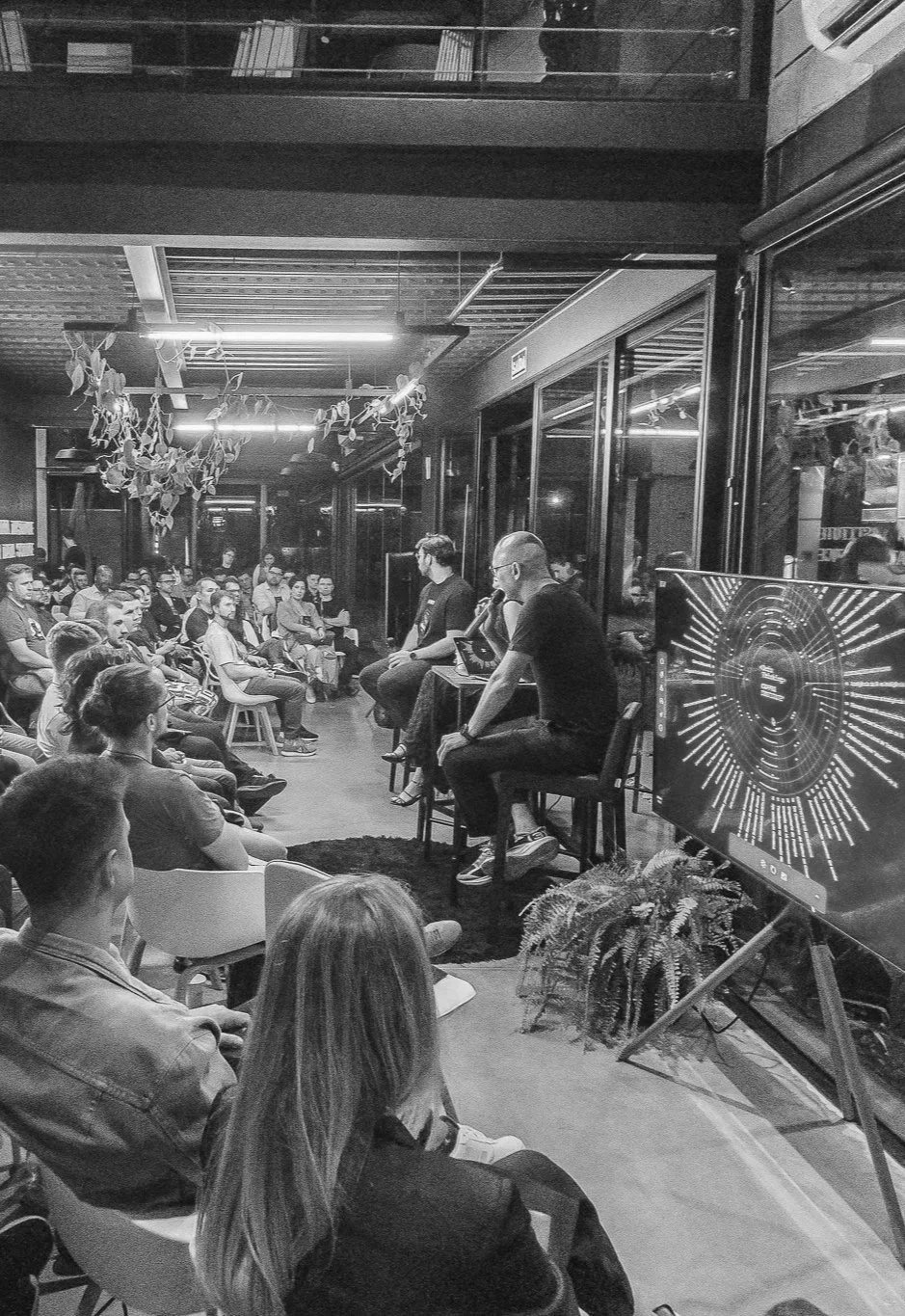
A space for research, reflection, and scientific dissemination dedicated to understanding the Analytical Culture that emerges when humans, data, and machines operate in interdependence.
This initiative is part of the Cappra Institute ecosystem and operates independently, in articulation with its applied practice in strategic consulting and executive education. This articulation supports the development of long-term studies, reflections, and content, grounded in intellectual rigor and a commitment to organizational transformation.
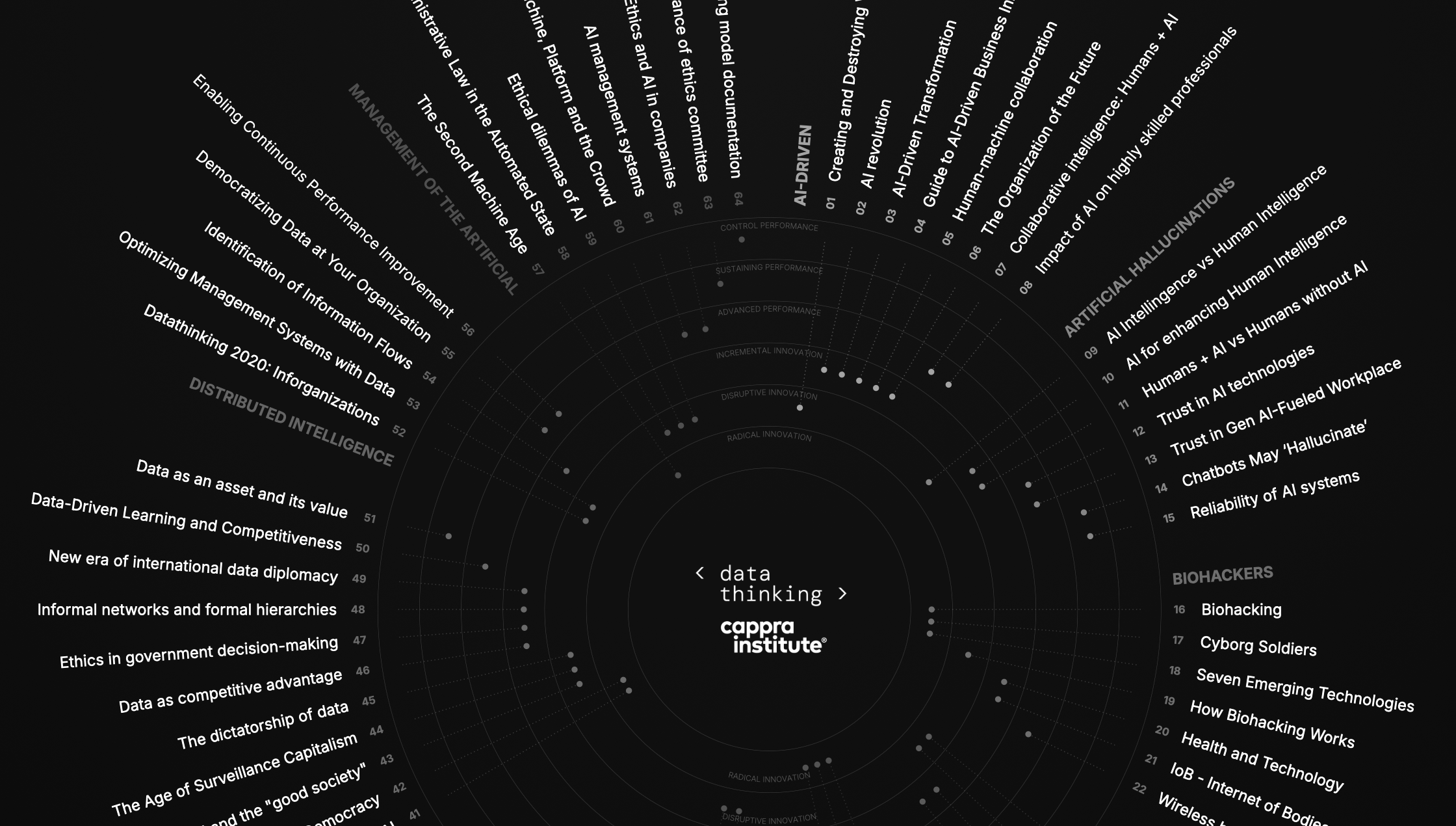
data thinking radar
A visual and interactive diagnosis of changes driven by Data and AI, from the Cappra Institute perspective, through the Envisioning radar.
Data Thinking provides a comprehensive diagnosis and an in-depth analysis of ongoing transformations driven by the growing impact of data and artificial intelligence. This approach fosters critical reflection and documents the evidence associated with a significant and disruptive shift affecting business, society, and the world of work.